

How to Choose Security Doors for Your Home

A security door can look solid in a showroom and still be the wrong choice for your home. The real test is how it performs once it is fitted to your entry, used every day, and exposed to Melbourne weather, foot traffic, and the odd knock or attempt to force it open. That is why knowing how to choose security doors properly matters. You are not just buying a panel and a lock. You are choosing long-term protection, airflow, presentation, and peace of mind.
For most homeowners, the best result comes from balancing strength, visibility, ventilation, and appearance. A front entry often needs a different solution from a laundry or side door, and what works for a new build may not be right for an older brick veneer home. The right door should suit the opening, match the home, and stand up to daily use without becoming a maintenance headache.
How to choose security doors without guessing
The first thing to look at is the door’s job. Some households want a stronger barrier at the front entry while still letting in light and breeze. Others are more concerned about securing a side access point, a back patio entry, or a rental property that needs dependable performance with minimal upkeep. If you start with the location and the purpose, the choice becomes much clearer.
Material is a major factor. Aluminium security doors are popular because they offer a strong, low-maintenance option with a neat finish and good resistance to corrosion. Steel can be very strong, but it may require more attention depending on the environment and finish. In many suburban homes, powdercoated aluminium gives a practical mix of durability, presentation, and value.
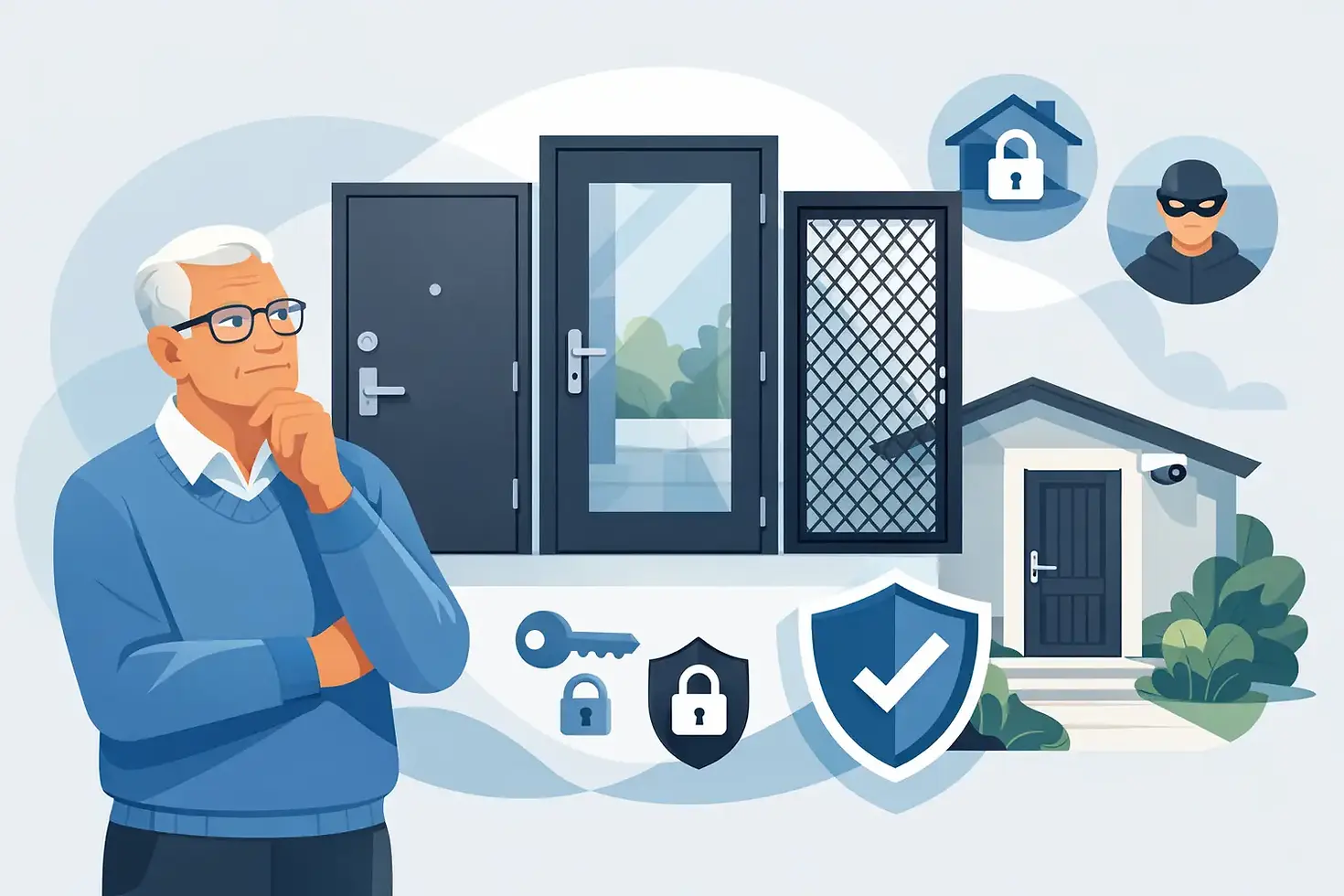
The infill matters just as much as the frame. Some doors use perforated aluminium sheet for privacy and strength, while others use stainless steel mesh to allow better outward visibility and airflow. Neither is automatically better in every situation. Perforated designs can suit homes where privacy from the street is a bigger concern. Stainless mesh often appeals to homeowners who want a cleaner view and a more open feel.
Start with the frame, not just the screen
A lot of buyers focus on the mesh or panel because that is the most visible part. In practice, the frame, corners, hinges, and lock area are just as important. A weak frame can undermine an otherwise decent door.
Look for a door with a solid construction and hardware that suits the level of use it will get. A front door used constantly by a busy family needs dependable hinges, a quality lock, and a frame built for regular opening and closing. A door on a quieter side entry may not get the same wear, but it still needs strength where forced entry is most likely.
It is also worth asking how the components work together. A strong mesh with a basic lock is not a complete security solution. The same goes for a good lock fitted to a poorly made frame. Security doors perform best when the frame, infill, hinges, locking system, and installation are all considered as one package.
The lock should suit the way you live
A security door is only as practical as its locking system. For some homes, a straightforward single lock will do the job. For others, especially doors used as a main point of entry, a triple lock can provide stronger engagement and a more secure close.
The right choice depends on the opening, the household, and the level of security you want. If elderly family members or children use the door frequently, ease of operation matters as much as security performance. There is no benefit in choosing a lock that feels awkward every day. Good security should not come at the expense of usability.
Consider airflow, privacy and street appeal
The best security door should protect your home without making it feel closed off. This is where many homeowners have to weigh up competing priorities. More privacy can mean less visibility out. More airflow can mean a more open screen style. A very decorative design may suit the façade, but it still needs the right underlying strength.
If your home gets afternoon sun or catches a good breeze through the front entry, ventilation may be high on the list. In that case, a door that allows airflow while maintaining security can add everyday comfort as well as protection. If your entrance faces the street or a neighbour’s driveway, privacy may be the bigger concern.
Appearance matters too. Security products should not look like an afterthought. A custom-fit door with the right colour, profile, and screen style can lift the entry and tie in with the rest of the home. This is especially important if you are investing in other exterior improvements and want a consistent finish.
How to choose security doors for different entry points
Not every opening should be treated the same. Front entries usually call for the best balance of presentation and security, because they are both highly visible and frequently used. Back doors often need strong protection with good airflow, especially in family homes where the rear area opens onto a patio or yard.
Side doors, garage access doors, and laundry entries are sometimes overlooked, but they are often the points intruders test first. These openings may benefit from a more security-focused design, particularly if they are less visible from the street. For commercial premises or small business sites, traffic volume, after-hours access, and the need for stronger physical deterrence can all shape the final choice.
This is where custom manufacture becomes valuable. Standard sizes can work in some settings, but many homes have openings that are slightly out, older frames, or specific clearance issues. A made-to-measure door gives a neater finish and usually performs better over time.
Installation is part of the product
Even a high-quality door can disappoint if it is badly fitted. Poor alignment, weak fixings, or rushed installation can affect how the lock engages, how smoothly the door closes, and how secure the final result really is.
Professional installation matters because the opening itself needs to be assessed properly. Brick, timber, rendered surfaces, and existing frames all present different conditions. An experienced installer will look at the door frame, reveal, fixing points, and clearance so the finished door works as it should from day one.
For homeowners across Melbourne’s suburbs, this is often where local experience pays off. Houses vary widely by era and style, and older properties can present challenges that are not obvious until measure-up. A supplier that understands those conditions can usually recommend a better solution than a generic off-the-shelf option.
Budget matters, but value matters more
Most people want to know what they should spend. That is fair, but the better question is what level of performance and finish you need for the money. The cheapest door may tick the box initially, but if the frame is light, the hardware is average, or the finish does not last, it can become poor value quickly.
A better-built door often gives more reliable everyday use, a stronger sense of security, and a cleaner look on the home. It may also save money over time through lower maintenance and fewer service issues. If the budget is tight, it can make sense to prioritise the most vulnerable or most-used entry first, then upgrade other doors later.
At Uncle Arthurs Doors and More, that practical approach is often what helps customers make a confident decision. It is not always about choosing the most expensive option. It is about choosing the right fit for the property, the lifestyle, and the level of protection required.
Questions worth asking before you buy
Before you commit, ask what the door is made from, what type of lock it includes, whether it is custom measured, and who is handling the installation. Ask how the finish will hold up in your conditions and what kind of after-sales support is available if adjustments are needed.
It is also sensible to ask whether the door has been designed with both security and presentation in mind. A good supplier should be able to explain the trade-offs clearly. If one option offers better privacy but less visibility, or stronger hardware with a slightly bulkier look, that should be discussed upfront.
Choosing well usually comes down to one simple idea: buy for the way you actually live, not just what looks impressive on display. The right security door should feel dependable every time you shut it, suit the home it is protecting, and keep doing its job for years to come.


Comments