

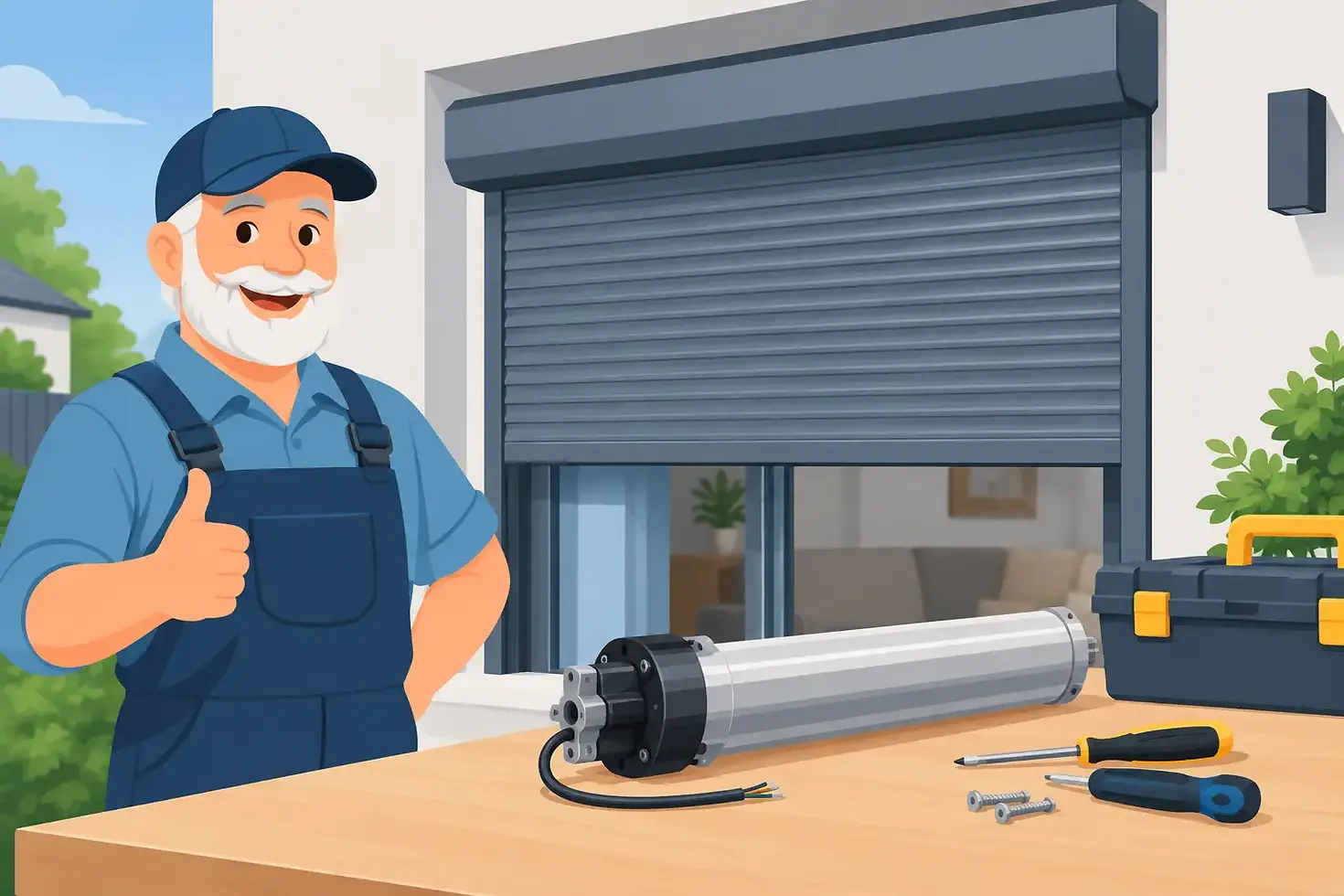
Roller Shutter Motor Replacement Guide for Homes

A roller shutter that stops halfway, strains on the way up or refuses to respond can quickly become more than an inconvenience. It may leave a window exposed, reduce privacy or prevent access to a shopfront. This roller shutter motor replacement guide explains how to identify a likely motor fault, what must be matched when choosing a replacement, and why a professional assessment is often the safest path.
Roller shutters are built to handle daily use and Melbourne’s changing weather, but no motor lasts forever. The right replacement can restore smooth, dependable operation while protecting the shutter curtain, guides and control system from further damage.
When the motor is the real problem
A non-operating shutter does not automatically mean the motor has failed. Power supply issues, a flat remote battery, damaged wiring, faulty wall switches, obstructed guides or incorrectly set travel limits can all produce similar symptoms. Replacing a motor before these causes are checked can add unnecessary cost and still leave the shutter out of action.
Start with the simple checks. Confirm that power is available to the shutter, test the remote with fresh batteries where relevant, and look for visible obstructions in the side guides. Leaves, dirt, nesting material and bent sections of guide can put enough load on a shutter to stop it travelling correctly.
Some signs point more strongly to a worn or failed motor:
The shutter has power but makes no sound or movement when activated.
The motor hums, but the curtain does not lift or lower.
The shutter moves slowly, stops under normal load or needs repeated commands.
It travels beyond its usual stopping point, or stops well before fully opening or closing.
These signs still need proper diagnosis. A shutter that has dropped unevenly, for example, may have a damaged axle, worn end supports or an issue with the curtain rather than the motor itself. A trusted technician will inspect the complete operating system before recommending a replacement.
Roller shutter motor replacement guide: what must match
Roller shutter motors are not one-size-fits-all components. A motor needs enough torque to lift the curtain comfortably, not merely move it on a good day. Installing an undersized motor can lead to slow operation, overheating and premature failure. Oversizing can also be unnecessary and may not suit the existing tube, brackets or controls.
The shutter’s width, height, curtain material and overall weight all influence the motor specification. Aluminium shutters vary considerably, particularly where foam-filled slats, heavier-duty profiles or larger openings are involved. The diameter and style of the roller tube also matter because the motor must fit correctly inside it.
Motor selection should also account for the following practical details. The drive side and mounting arrangement need to suit the shutter box. Limit settings must allow the curtain to stop precisely at the fully open and closed positions. The replacement motor must be compatible with the existing control method, whether that is a wall switch, key switch, remote handset, smart controller or a combination of controls.
For security shutters on windows, doors or commercial premises, consider whether a manual override is needed. This feature can be valuable during a power outage, particularly where the shutter covers an access point. It is not suitable or necessary for every installation, but it is worth discussing before the work begins.
A quality motor should be selected for the shutter’s actual workload, not just its physical dimensions. For a frequently used garage, patio opening, bedroom window or business entry, reliability and correct setup are more valuable than choosing the cheapest available option.
Tubular motors and control options
Most residential roller shutters use tubular motors fitted inside the roller tube. These provide a neat, protected installation and can be operated by a switch, remote control or automation system. Some older shutters use different arrangements, so it is wise to identify the existing system before ordering parts.
If your shutter has been operating from a remote, a replacement motor does not always require replacing every control component. However, older receivers, remotes and wiring may be unreliable or incompatible with newer equipment. In some cases, upgrading the control system at the same time is the more sensible long-term investment.
For households considering smart control, the question is not simply whether it can be added. It is whether the shutter is mechanically sound, the motor is correctly rated and the controls will remain simple for everyone in the household to use. Convenience should never come at the expense of secure, dependable operation.
Why DIY replacement can create bigger issues
Changing a roller shutter motor looks straightforward when the shutter box is open, but the system carries several risks. The curtain is heavy, the axle must be properly supported, and electrical connections need to be completed safely. Incorrectly releasing or handling the shutter can cause damage to the curtain or guides, and can create a serious injury risk.
There is also the issue of adjustment. A motor that is physically installed but has poorly set limits can drive the curtain too far into the box, leave gaps at the sill or place excess stress on the shutter every time it operates. Over time, that extra load can damage slats, straps, end caps and the motor itself.
Electrical work should be undertaken by an appropriately qualified professional. Beyond safety, a professional installation provides confidence that the motor, controls and safety functions have been tested before the shutter is returned to service.
DIY may be reasonable only for minor, non-electrical checks such as replacing remote batteries, clearing debris from guides or gently cleaning the shutter. Once the box needs to be opened, the curtain needs support, or wiring and motor settings are involved, professional help is the practical choice.
What a professional replacement should include
A proper motor replacement is a service process, not simply a swap of parts. The technician should first confirm the fault and inspect the curtain, guides, axle, brackets and controls. This helps prevent a new motor being installed into a shutter with an underlying mechanical problem.
After selecting a suitable motor, the shutter should be safely secured and the old unit removed without damaging the tube or curtain. The new motor is fitted, aligned and connected to the appropriate controls. Its upper and lower travel limits are then set carefully so the shutter closes securely and opens cleanly into the box.
The final test matters. The shutter should travel smoothly through several cycles, stop consistently, respond correctly to each control and sit evenly in the guides. If there is a manual override, it should be demonstrated so the property owner understands how it operates when required.
For older shutters, this inspection can also identify worthwhile preventative work. Replacing worn guide inserts, checking brushes or seals, tightening loose mounting points and cleaning accumulated debris may improve operation and help the new motor last longer.
Protecting your replacement motor
Once a new motor is installed, a little routine care goes a long way. Keep the guides clear of garden debris and avoid operating the shutter when an object is caught beneath it. Do not force a shutter that appears jammed or uneven, as this can put immediate strain on the motor and curtain.
Use the shutter in a measured way. Repeatedly opening and closing it in quick succession can trigger a motor’s thermal protection, particularly on hot days or with large shutters. If it stops after frequent use, allow it time to cool rather than continuing to press the control.
It is also worth acting early when operation changes. New rattling, slowing, uneven movement or unreliable remote response are easier and more affordable to investigate before the shutter becomes fully stuck. For Melbourne homeowners who rely on shutters for security, insulation and privacy, keeping them in good working order supports everyday comfort as well as peace of mind.
At Uncle Arthurs Doors and More, the focus is on custom-fit solutions that suit the shutter and the property, rather than a quick fix that may not last. A correctly specified motor and careful installation can give your roller shutters the quiet, reliable performance your home deserves.


Comments