

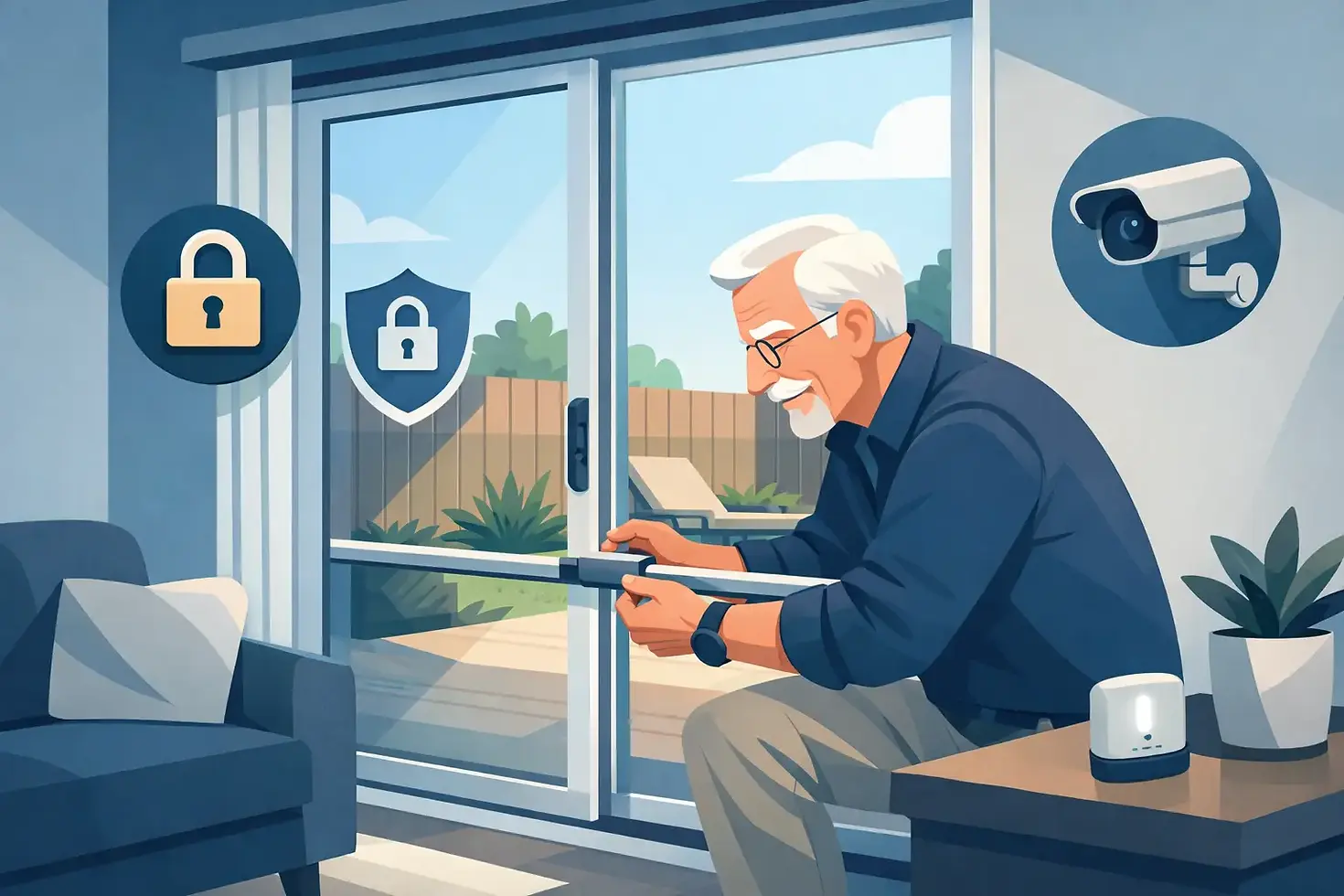
How to Secure Sliding Doors Properly
- unclearthurdbsa
- Jun 23
- 6 min read

A sliding door should never be the weak point of an otherwise well-secured home. Yet that is often exactly what happens. Homeowners invest in alarms, cameras and front entry upgrades, but the large glass door opening onto the alfresco, patio or backyard is left with only a basic factory latch. If you are wondering how to secure sliding doors properly, the answer is usually not one single fix. It is a combination of stronger hardware, better barriers and the right fit for the way you use the space.
How to secure sliding doors without ruining convenience
A good sliding door still needs to do its job. It should open smoothly, let in light and connect indoor living with the outdoors. Security upgrades need to strengthen the opening without turning it into a daily frustration.
That is why the best approach starts with how the door is used. A rear family door that opens all day for kids and pets needs a different setup from a side access slider that is rarely touched after dark. The right solution balances security, airflow, visibility and ease of access.
In many homes, the biggest issue is not the glass itself. It is the lock, the track or the frame. Standard sliding door latches can be quite easy to force, especially on older units. Worn rollers can also create slack, which makes it easier for an intruder to lift or rattle the panel. Before adding extra products, it is worth checking whether the existing door is still sitting square, locking cleanly and closing firmly.
Start with the lock and track
If your sliding door only has a simple latch, that is the first place to improve. A quality keyed lock or multi-point locking system gives the door a much stronger hold in the frame. This matters because many break-ins are opportunistic. If a door resists quick tampering, most intruders will move on.
Track security is just as important. A sliding panel can sometimes be lifted out of the track if there is enough clearance. Anti-lift devices prevent that movement and stop one of the most common weak spots in older sliding door systems. Even a solid lock is less effective if the panel itself can be shifted.
A simple track block or security bar can also add another layer of protection. These are practical because they physically limit the door’s movement, even if someone interferes with the latch. They can work well as a budget-friendly improvement, although they are not always the neatest long-term option and can be inconvenient if you are constantly stepping outside.
The role of a security screen door
For many households, a security screen door is the most effective answer to how to secure sliding doors while keeping the area usable. It creates a separate protective barrier in front of the glass door, so the opening can be locked securely without shutting out air and natural light.
This is where quality matters. Not all screen doors are genuinely built for security. A decorative or lightweight flyscreen may help with insects, but it will not deliver meaningful resistance against forced entry. A properly made security sliding door should include a strong frame, quality mesh or grille, reliable locking hardware and professional installation so there are no weak fixing points.
The benefit is not only security. A well-fitted security screen can improve ventilation on warm days, allow the main slider to stay open with more confidence and preserve the open feel that makes sliding doors popular in the first place. For households that use their outdoor area regularly, this can be a far better option than relying only on locks and bars.
Glass matters, but it is not the whole story
People often assume the glass is the main risk. It can be, particularly if it is older or not safety rated, but replacing glass alone will not secure an entry point if the lock, frame and surrounding installation remain weak.
Toughened or laminated glass can improve resistance and safety. Laminated glass is especially useful because it tends to hold together after impact rather than breaking apart immediately. That can slow forced entry and create more noise and delay. The trade-off is cost. Glass upgrades are usually more expensive than hardware improvements, so they make the most sense when you are already replacing the door or carrying out a broader renovation.
If your current door is otherwise in good condition, a stronger lock and a quality security screen may give better value than replacing the glazing alone. It depends on the age of the unit, the frame condition and how exposed the door is from the outside.
Why installation quality makes such a difference
Even the best security product can underperform if it is poorly fitted. A lock that does not align properly, a frame fixed into weak material or a screen door with too much movement around the edges will not give the protection you expect.
Sliding doors need accurate measuring and proper adjustment. Custom-fit products usually perform better than generic options because they match the opening, the frame condition and the usage requirements of the property. That matters in older suburban homes where openings are not always perfectly square and where wear over time can affect how doors slide and lock.
This is one reason many homeowners choose a specialist rather than piecing together a DIY fix from the hardware shop. There is nothing wrong with simple add-ons for a temporary improvement, but long-term security usually comes from stronger components installed correctly.
How to secure sliding doors in homes with pets, kids or frequent traffic
A practical security setup has to work with real life. If the door is used constantly, a fiddly bar in the track may be removed and forgotten. If the lock is awkward, people may leave it open. Security that is inconvenient often ends up unused.
For family homes, ease of operation matters almost as much as strength. A secure sliding screen door with quality locking can be a smart option because it lets the household maintain airflow and visibility without relying on the glass door itself as the only barrier. If you have children or grandchildren coming and going, smooth operation and dependable closing become especially important.
For ground-floor business premises or homes with side laneway access, a heavier-duty setup may be worth considering. These locations often face greater exposure, especially when visibility from the street is limited. In that case, a stronger screen system, reinforced lock and closer attention to surrounding windows and gates can make more sense than focusing on the slider alone.
Don’t ignore the area around the door
A secure door can still be undermined by what surrounds it. Poor lighting, low visibility and easy access through side paths or back fences all increase risk. If someone can work on a sliding door without being seen, they have more time to test the lock or frame.
Simple changes around the opening can improve security significantly. Sensor lighting, better sightlines from inside the home and secure side gates all help reduce the chance of tampering. For many Melbourne homes, the rear sliding door sits under a covered outdoor area, which is excellent for comfort but can also provide cover for an intruder. In those cases, physical door security becomes even more important.
This is also where presentation and protection can work together. A properly designed security solution should not make the back of your home look harsh or industrial. A neat, custom-fitted security door can complement the property while still delivering the strength needed for peace of mind.
When replacement is the smarter option
Sometimes the right answer is not an upgrade but a full replacement. If the existing sliding door is old, warped, loose in the frame or fitted with outdated hardware, patching one issue after another may not be the best investment.
A newer sliding door system with stronger framing, better locking and a matching security screen can give a much more reliable result. It can also improve energy efficiency, ease of use and the overall finish of the opening. That is often worth considering if you are already updating doors, windows or outdoor living areas.
At Uncle Arthurs Doors and More, this is where experience matters. A tailored solution tends to outperform an off-the-shelf fix because every opening, household and security concern is slightly different.
The best security upgrade is the one that suits your home, gets used every day and gives you confidence when the lights go out. If your sliding door feels like the weakest part of the house, it is worth fixing properly rather than hoping the standard latch will do the job.


Comments