

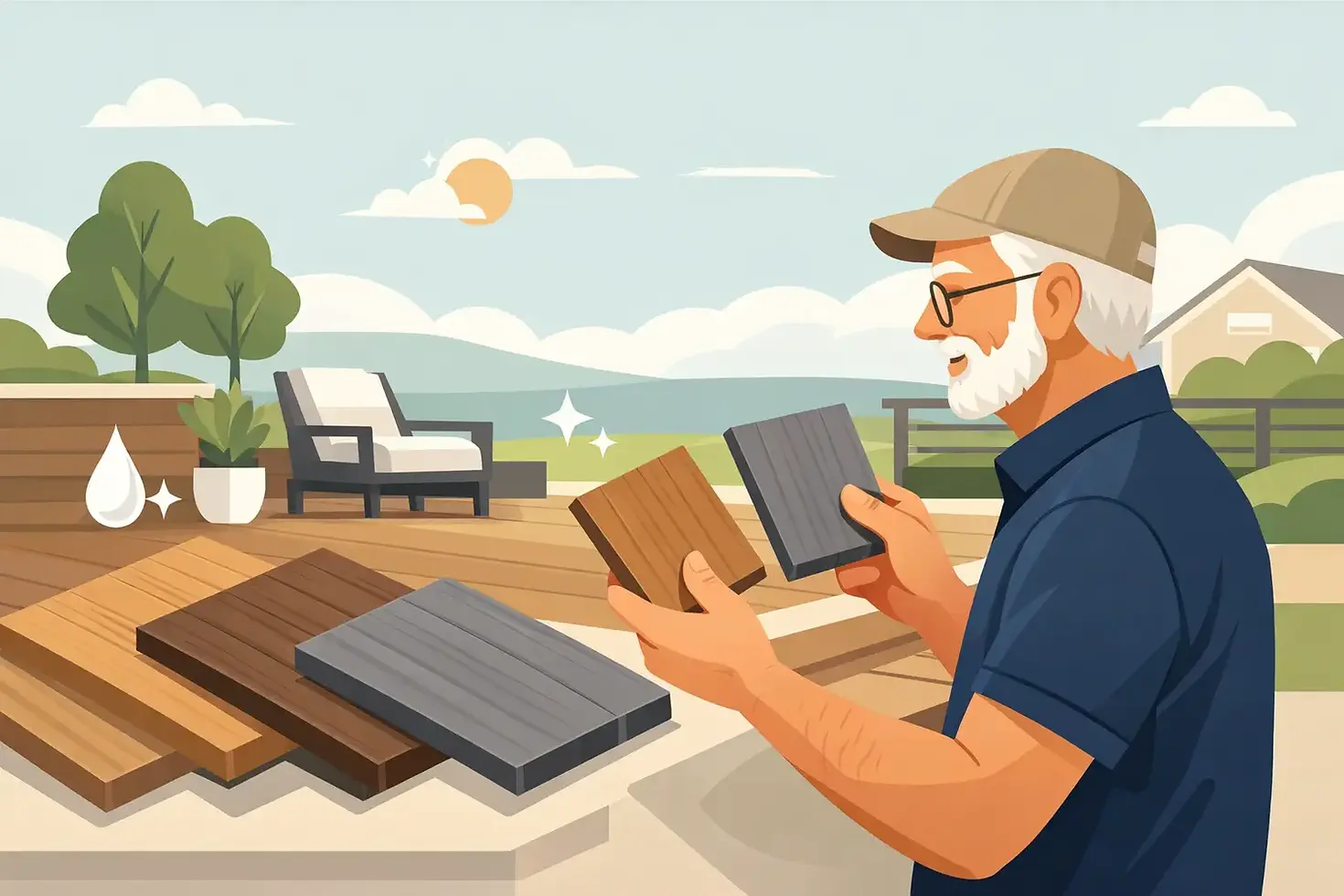
Choosing Low Maintenance Decking Boards

A deck should make weekends easier, not give you another job every few months. That is exactly why more homeowners are asking about low maintenance decking boards - especially when they want the look of a finished outdoor area without the sanding, staining and regular repairs that often come with traditional timber.
For many Melbourne households, the appeal is simple. You want an outdoor space that looks neat, handles changing weather well and stays presentable with basic cleaning rather than constant upkeep. But not all decking products marketed as low maintenance perform the same way, and the wrong choice can still leave you dealing with fading, movement, surface wear or a finish that never quite suits the home.
What low maintenance decking boards actually mean
Low maintenance does not mean no maintenance. Any outdoor surface will still need occasional cleaning, and every board type has its own limits. What it usually means is that you are reducing the ongoing tasks that take time, cost money and chip away at the enjoyment of your outdoor area.
With the right decking boards, you are generally avoiding regular oiling, staining, sealing and a lot of the repair work that can come with natural timber. You are also aiming for better resistance to moisture, sun exposure, insect damage and general wear. That matters if your deck is used often, sits around a pool, or is part of an everyday entertaining area where presentation counts.
The big advantage is predictability. A low maintenance deck is easier to keep looking consistent over time, which is often what homeowners value most. It is not just about less work. It is about fewer surprises.
Why composite is often the preferred option
When people compare low maintenance decking boards, composite usually ends up in the conversation very quickly. That is because it has been designed to solve many of the common frustrations associated with timber decking.
Composite decking boards are typically made from a blend of recycled wood fibres and plastic materials. The result is a board that offers the visual appeal of timber but with improved resistance to rotting, splintering and warping. For busy households, that is a practical step up.
There is also a strong lifestyle benefit. If you want an outdoor area that feels polished year-round, composite is easier to manage. A wash down and routine clean are often enough to keep it in good condition. You are not planning your long weekend around recoating the deck.
That said, the quality of the board matters. Better composite products tend to have more stable construction, more convincing timber-look finishes and stronger protection against fading or staining. Cheaper options can sometimes feel hollow, look artificial or show wear sooner than expected.
How to compare low maintenance decking boards properly
The surface finish is the first thing most people notice, but it should not be the only thing driving the decision. A board can look great in a sample and still be a poor fit once it is exposed to the weather, furniture, foot traffic and the general day-to-day use that comes with family life.
Look at heat performance
In Australia, heat matters. Some darker boards can become warmer underfoot than people expect, particularly in full sun. If the deck will be used barefoot, near a pool or in an exposed backyard, this should be discussed early. Colour choice, board composition and the location of the deck all affect comfort.
Check slip resistance
A deck needs to be safe as well as attractive. This is particularly important for homes with children, older residents or areas that are regularly exposed to water. Surface texture can make a real difference. Some boards offer a smoother, more refined look, while others are designed with more grip in mind.
Consider colour stability
Most outdoor products change slightly over time, especially in the first period after installation. The question is how much change is normal and whether the product is built to hold its appearance well over the long term. If a consistent colour is important to you, ask about expected weathering and fade resistance rather than assuming every board will perform the same.
Pay attention to board quality
Not all composite boards are made to the same standard. Density, capping technology, manufacturing consistency and warranty support all play a part. A better-built board tends to feel more solid, fit more cleanly and age more evenly.
Think beyond the board itself
The frame, fixings and installation method matter just as much as the decking material. Even excellent boards can disappoint if they are not installed correctly or if the substructure is not suited to the site. Drainage, spacing and ventilation all influence how the finished deck performs.
When timber may still suit the job
Composite is a strong option, but there are situations where timber still appeals. Some homeowners simply prefer the natural variation and character that only real timber can provide. Others are matching an existing outdoor style and want continuity across the property.
The trade-off is maintenance. Timber can look outstanding, but it usually asks more from you over time. It may need regular treatment to protect against moisture, sun exposure and general ageing. Depending on the species and site conditions, there can also be more movement, splitting or surface checking.
If you love the authentic look of timber and do not mind the upkeep, it can still be the right decision. But if the goal is to reduce ongoing work while keeping a tidy, modern finish, low maintenance decking boards are usually the more practical choice.
The style factor matters more than people think
A deck is not just a floor outside. It changes how the whole rear of the home feels. The right board colour and profile can lift tired brickwork, soften aluminium features, or tie together outdoor blinds, gates and entertaining areas so the property feels more complete.
This is where product selection should be guided by the home rather than just trends. Grey tones might suit a contemporary build, while warmer browns may better complement more traditional suburban homes. Board width, edge detailing and fastening systems also affect the final look.
A low maintenance product should still feel like a design decision, not a compromise. That is often where experienced advice helps - matching the practical performance of the board with the visual finish that suits the house.
Installation quality is what protects your investment
Even the best decking board cannot make up for poor installation. Uneven joists, poor spacing, weak drainage planning or shortcuts with fixings can all affect the lifespan and appearance of the deck.
That is why a custom-fit approach makes a difference. Every property has different site conditions, levels, access points and usage patterns. A deck beside a high-traffic entertaining area may need different planning from one used mainly as a quiet entry platform or garden link.
Professional installation is about more than getting the boards down neatly. It is about making sure the whole system works together - structure, finish, drainage, expansion allowance and edge treatment. When that is handled properly, maintenance stays lower because the deck is built to perform as intended.
What homeowners should ask before choosing
Before moving ahead, it helps to ask a few practical questions. How much direct sun does the area get? Will the deck sit near a pool or spa? Is colour consistency more important than natural variation? Do you want the appearance of timber without the upkeep, or are you still weighing up the feel of natural timber against easier care?
It is also worth asking what the deck will need from year to year. A quality supplier should be clear about cleaning expectations, likely wear patterns and what is realistic in an Australian outdoor setting. Honest advice is far more useful than hearing that a product is perfect in every condition.
For homeowners wanting a durable, attractive outdoor upgrade without the usual sanding and staining cycle, composite low maintenance decking boards are often the smartest balance of appearance, performance and long-term value. Businesses like Uncle Arthurs Doors and More understand that outdoor improvements need to work hard, look the part and hold up over time - not just on installation day.
The best deck is the one you use often and worry about less. Choose boards that suit your home, your lifestyle and the amount of upkeep you actually want to commit to, and the outdoor area becomes far easier to enjoy.


Comments